
The future of visa processing is unfolding before our eyes, driven by rapid technological advancements and evolving global mobility needs. For U.S. travelers, students, workers, and immigrants, the days of paper-heavy applications, months-long waits, and in-person consulate visits are gradually giving way to a streamlined, secure, and data-driven system. As digital visa processing becomes the norm, agencies like U.S. Citizenship and Immigration Services (USCIS) and the Department of State are leveraging AI-powered visa systems, biometric verification, and automation to modernize consular processing. These changes promise faster visa processing times, enhanced security, and a vastly improved applicant experience—but they also introduce new challenges, from privacy risks to unequal access. In this article, we’ll explore how immigration technology is redefining cross-border mobility and what it means for anyone navigating the U.S. visa landscape.
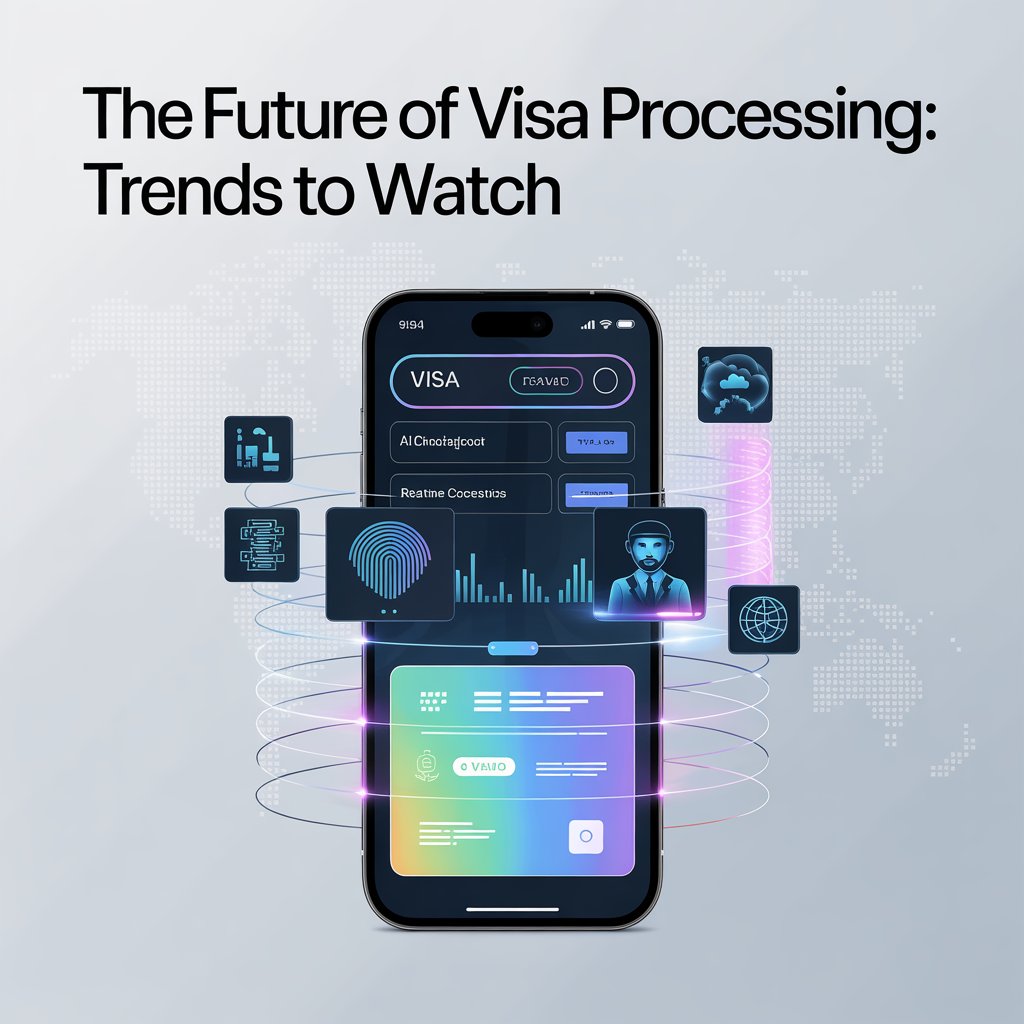
Current State of U.S. Visa Processing: A System at a Crossroads
Today’s U.S. visa system remains a patchwork of legacy infrastructure and incremental digital upgrades. Most applicants still rely on the online visa application platform (e.g., the DS-160 form), but critical steps—like biometric appointments at Application Support Centers (ASCs) and in-person consulate interviews—create bottlenecks. In 2025, the average wait time for a nonimmigrant visa interview exceeded 24 weeks in high-demand regions like India and Brazil, while USCIS processing for employment-based green cards stretched to 5+ years for some categories.
The reliance on paper documentation persists despite the rise of e-visa systems for short-term travel (e.g., ESTA for the Visa Waiver Program). Fraud risks remain significant: in 2024, U.S. authorities identified over 12,000 fraudulent visa applications linked to forged passports or misrepresented employment details. Meanwhile, outdated IT systems struggle to handle surging demand, with USCIS reporting 30% of form rejections due to technical errors in 2025.
This inefficiency isn’t just a headache for applicants—it costs the U.S. economy dearly. A 2025 Brookings Institution study estimated that visa delays cost American businesses $9.2 billion annually in lost productivity and missed talent opportunities. With global migration projected to grow by 40% by 2030, the pressure to modernize is intensifying.
The Rise of Digital and AI-Powered Visa Systems
AI as the New Gatekeeper
The most transformative shift in U.S. visa processing is the integration of artificial intelligence. Agencies are deploying AI in visa processing to automate document verification, flag inconsistencies, and predict application outcomes. For example:
- USCIS’s AI Pilot Program: Since 2024, USCIS has used machine learning to analyze I-130 (family sponsorship) petitions, reducing manual review time by 35%. The system cross-references public records, social media footprints, and historical data to assess credibility—though human officers retain final approval authority.
- Fraud Detection Algorithms: Customs and Border Protection (CBP) now employs AI to scan visa applications for patterns linked to visa fraud detection, such as mismatched employment histories or suspicious travel itineraries. Early results show a 22% increase in identifying high-risk cases.
End-to-End Digital Platforms
The era of standalone online visa application portals is ending. Next-generation digital visa systems unify every step—from initial submission to biometric enrollment—into a single ecosystem. The U.S. is testing this model through the Secure Traveler Portal, a blockchain-based platform that:
- Allows applicants to upload documents via encrypted cloud storage.
- Integrates with third-party services (e.g., bank statements, employment records) via API.
- Provides real-time status updates, cutting confusion over “pending” cases.
Countries like Australia and Estonia have already slashed processing times by 50%+ using similar systems, setting a benchmark for U.S. adoption.
Biometric Verification: Beyond Fingerprints to Secure Digital Identity
Biometrics are evolving from a security add-on to the cornerstone of immigration technology. While fingerprints have long been standard for U.S. visas, new biometric verification methods are accelerating adoption:
Facial Recognition at Scale
CBP’s Simplified Arrival program now uses facial recognition at 140+ U.S. airports, matching travelers to passport photos in seconds. By 2026, this will expand to all visa applications, with applicants submitting selfies during the online visa application phase. The system’s error rate has dropped to 0.08%, making it more reliable than manual checks.
Multi-Modal Biometrics for High-Risk Cases
For asylum seekers or employment-based visas, agencies are testing multi-modal biometrics—combining iris scans, voice analysis, and even gait recognition. The EU’s Entry/Exit System (EES), launching in 2026, uses this approach to prevent identity fraud, and U.S. officials are closely monitoring its success.
Privacy vs. Security: The Balancing Act
Critics warn that secure digital identity systems risk creating permanent surveillance databases. The ACLU has challenged CBP’s retention of biometric data beyond 72 hours, arguing it violates the Fourth Amendment. Meanwhile, hackers breached a third-party biometric vendor in 2025, exposing 200,000 applicants’ facial scans. As smart border security advances, policymakers must address these vulnerabilities—or risk eroding public trust.
Automation: Cutting Delays Without Sacrificing Scrutiny
Robotic Process Automation (RPA) for Routine Tasks
Visa automation is transforming back-office operations. USCIS now uses RPA bots to:
- Populate forms from prior applications (e.g., reusing biographic data for renewal cases).
- Schedule ASC appointments based on real-time capacity.
- Flag missing documents before submission, reducing rejections by 28%.
For low-risk categories like tourist visas, e-visa systems could soon enable instant approvals. Canada’s eTA program already grants travel authorization in under 10 minutes for 98% of applicants—a model the U.S. may replicate for ESTA expansions.
AI-Assisted Consular Decisions
At embassies, officers spend 60% of their time on administrative tasks. AI tools like VisaLens (piloted in London and Mumbai) summarize application details, highlight red flags, and suggest interview questions—freeing officers to focus on complex cases. Early data shows a 20% faster decision rate without compromising security.
Benefits: Speed, Security, and Smarter Mobility
For Applicants
- Faster processing times: Digital workflows could cut average wait periods by 40% by 2030.
- Fewer errors: Auto-filled forms and real-time validation reduce mistakes that trigger delays.
- Transparent tracking: Applicants gain visibility into every step, similar to package delivery apps.
For Governments
- Enhanced security: AI-driven visa fraud detection identifies threats invisible to human reviewers.
- Cost savings: Automating routine tasks saves USCIS an estimated $1.3 billion annually by 2028.
- Data-driven policy: Analytics reveal trends (e.g., surge in student visas from Nigeria), enabling proactive resource allocation.
For Employers and Educators
- Predictable timelines: Companies can plan hiring cycles around reliable visa processing times.
- Reduced compliance burden: Automated I-9 verification tools minimize paperwork for employers.
- Global talent access: Universities report 15% higher international enrollment when visa processes are streamlined.
Key Risks and Challenges to Watch
Privacy in the Age of AI
As immigration technology collects more data, questions about usage and storage intensify. The EU’s GDPR-inspired U.S. Biometric Data Act (proposed in 2025) seeks to limit data retention, but enforcement remains unclear. Applicants fear their social media activity or financial history could be misused—a concern amplified by cases where AI misclassified applicants due to biased training data.
System Errors and the “Black Box” Problem
AI isn’t infallible. In 2025, an algorithm glitch falsely flagged 1,200 H-1B applicants as high-risk, delaying their visas by months. Without transparency into how decisions are made (“black box” systems), applicants struggle to appeal errors. Advocacy groups demand explainable AI standards for immigration tools.
The Digital Divide
Not all applicants have equal access to technology. Rural communities in Africa and South Asia face barriers to completing online visa applications, while elderly or disabled applicants may struggle with biometric systems. Without offline alternatives, digital visa systems could exclude vulnerable populations—a risk the UN’s Migration Agency calls “a new form of border wall.”
Policy Lag vs. Tech Speed
Technology evolves faster than regulations. While e-visa systems enable instant approvals, U.S. law still mandates in-person interviews for most visas—a requirement that could stifle innovation. Immigration lawyers warn that outdated statutes may force agencies to “shoehorn” new tools into legacy frameworks, creating inefficiencies.
Practical Tips for Future Visa Applicants
1. Master Digital Literacy
- Use official government portals (e.g.,
travel.state.gov,uscis.gov) to avoid phishing scams. - Store digital copies of passports, bank statements, and employment letters in encrypted cloud storage.
2. Prepare for Biometric Checks
- Ensure your passport photo meets facial recognition standards (neutral expression, no glare).
- Test video-call readiness for potential virtual interviews (e.g., stable internet, quiet space).
3. Monitor Policy Updates
- Subscribe to USCIS’s
myUSCISalerts for real-time changes to document verification requirements. - Consult immigration attorneys early if applying for complex categories (e.g., O-1 visas).
4. Leverage Employer/Educator Resources
- Universities and corporations often provide tech support for visa applications—ask about dedicated portals or AI-assisted tools.
- For work visas, ensure your employer uses automated I-9 systems like
E-Verifyto avoid delays.
Conclusion: The Next 5 Years of U.S. Visa Processing
By 2030, the future of visa processing will likely feature:
- Fully digital workflows: Paper applications will vanish for most categories, with e-visa systems handling 70%+ of short-term visas.
- Predictive analytics: AI will forecast processing times based on historical data, helping applicants time submissions strategically.
- Global interoperability: U.S. systems may sync with allies’ databases (e.g., Five Eyes nations) for seamless cross-border mobility.
Yet challenges will persist. Privacy battles will escalate as biometric databases grow, and geopolitical tensions could fragment smart border security efforts. The key to success lies in balancing innovation with equity—ensuring that immigration reform technology serves all applicants, not just the tech-savvy few.
For U.S. travelers and immigrants, the message is clear: the visa process won’t just be faster—it will be fundamentally reimagined. Those who adapt to digital visa systems today will navigate tomorrow’s borders with confidence. As one State Department official recently noted, “The future of visas isn’t just about stamps in passports. It’s about building trust through technology.”