
Why Visa Fraud Is Rising
Visa fraud and immigration scams cost applicants $1.2 billion in losses globally in 2025, with U.S. applicants representing 38% of reported cases according to the FTC. As of April 2026, USCIS has issued 17 scam alerts this year alone—nearly double the 2025 rate—due to increasingly sophisticated fraud tactics targeting stressed applicants.
The problem is amplified by:
- Complex immigration processes that confuse newcomers
- High-stakes applications (like H-1B visas with 2027 caps opening March 4, 2026)
- Economic pressures driving desperate applicants toward “guaranteed approval” schemes
- AI-powered phishing tools creating hyper-realistic fake communications
“We’ve seen a 63% increase in fake visa agent operations since 2024,” warns USCIS Fraud Detection Director Maria Chen in a March 2026 briefing. “Scammers exploit urgency—especially around seasonal visa windows like the upcoming H-1B registration period.”
This guide delivers actionable, up-to-date strategies to help travelers, students, workers, and families navigate the visa process safely. We’ll cover how to spot red flags, verify legitimate services, and protect your identity using 2026’s latest fraud prevention protocols.
What Visa Fraud Looks Like in 2026
Fake Visa Agents & “Notario Fraud”
Unauthorized consultants posing as immigration lawyers (“notarios“) remain the #1 scam type. In 2025, the DOJ prosecuted 217 fake agents who:
- Collected $500-$5,000 in “processing fees” for worthless services
- Submitted incorrect forms causing application denials
- Stole client identities to file fraudulent petitions
Digital Scams Targeting Applicants
New tactics detected in early 2026 include:
| Scam Type | How It Works | Real Example |
|---|---|---|
| AI Voice Cloning | Scammers use AI to mimic USCIS officials’ voices | Caller ID shows “USCIS 800-375-5283” while demanding “emergency fees” |
| Phishing Emails | Fake “case update” emails with malicious links | Message claims your H-1B registration failed; link leads to credential-stealing site |
| Visa Lottery Scams | “Congratulations! You won the DV lottery!” emails | Requests $499 “processing fee” to claim non-existent visa |
| Fake Job Offers | Bogus employers promising work visas | Requires payment for “visa sponsorship paperwork” that doesn’t exist |
Government Impersonation Red Flags
Scammers increasingly mimic official channels:
- Emails ending in .com/.net (e.g.,
uscis-notice@uscis-support.com) instead of@uscis.dhs.gov - Text messages claiming “your biometrics appointment is canceled” with rescheduling link
- Social media ads for “USCIS-approved consultants” with fake accreditation badges
⚠️ 2026 Alert: USCIS reports a surge in scams related to the new Trump Gold Card program. The only legitimate source is
uscis.gov/i-140g—nottrumpcard.gov(a known scam site).
Warning Signs of a Visa Scam
🚩 Top 7 Visa Scam Red Flags
- Guaranteed Approval Promises
No legitimate agent can promise visa approval. USCIS states: “If someone guarantees success, run.” - Upfront Fees Before Services
Reputable attorneys charge after filing. Scammers demand full payment before submitting forms. - Pressure to Pay Immediately
“This offer expires in 2 hours!” is always a scam. Legitimate agencies give reasonable deadlines. - Unusual Payment Methods
Requests for gift cards, cryptocurrency, or wire transfers to personal accounts = fraud. - No Physical Office Address
Verify consultants have a real office. Scam operations use virtual addresses or P.O. boxes. - Website Without .gov Domain
All official U.S. immigration services use*.govdomains. Check carefully for lookalike sites (e.g.,usics.gov). - Spelling/Grammar Errors
Government communications are professionally edited. Errors in emails/documents indicate fraud.
How to Identify Fake Visa Emails (2026 Update)
USCIS’s March 2026 alert highlights these email warning signs:
- Mismatched sender address: Hover over “From” field to see actual email (e.g.,
uscis-alerts@secure-email.org) - Urgent action demands: “Your visa will be canceled in 24 hours unless…”
- Attachments labeled “Form I-797C”: Real notices never come as unsolicited attachments
- Links to non-.gov sites: Check URL before clicking—even if text says “uscis.gov”
🔍 Pro Tip: Forward suspicious emails to
USCIS.Webmaster@uscis.dhs.gov—USCIS confirms legitimacy within 72 hours.
How to Protect Yourself: 7 Actionable Steps
Step 1: Verify All Immigration Consultants
Only these professionals can legally give immigration advice:
- Accredited representatives from DOJ-recognized organizations
- Licensed attorneys verified via your state bar association
✅ LEGIT CHECK:
1. Visit [uscis.gov/find-legal-services](https://www.uscis.gov/scams-fraud-and-misconduct/avoid-scams/find-legal-services)
2. Search by zip code for free/low-cost help
3. Confirm accreditation through DOJ's roster
Step 2: Use Only Official .gov Websites
Bookmark these critical links:
- USCIS.gov (not uscis-support.com)
- Travel.State.gov for visas
- DHS.gov for policy updates
🔐 Security Tip: Look for the padlock icon 🔒 and “https://.gov” in the address bar. Fake sites often use “https://usics-secure.com” to mimic legitimacy.
Step 3: Enable Two-Factor Authentication
For all immigration accounts:
- Create a myUSCIS account
- Enable 2FA via SMS or authenticator app
- Never share verification codes—even if caller claims to be “USCIS security”
Step 4: Document Every Transaction
Keep records of:
- Consultant contracts (with physical address)
- Payment receipts (never pay cash)
- Email screenshots (including sender address)
- Website URLs visited
Step 5: Use USCIS’s Free Verification Tools
- Emma: Chat with USCIS’s virtual assistant (upper-right corner of uscis.gov)
- Case Status Online: Only check at egov.uscis.gov
- E-Verify: Confirm employer legitimacy at e-verify.gov
Step 6: Secure Sensitive Documents
- Never email originals of passports, birth certificates, or financial records
- Use USCIS’s secure portal for document uploads
- Redact non-essential info (e.g., SSN middle digits) on shared copies
Step 7: Monitor for Identity Theft
After any visa application:
- Freeze credit at all 3 bureaus (Experian, Equifax, TransUnion)
- Set up IRS Identity Protection PIN
- Check annualcreditreport.com quarterly
Safe Ways to Apply for a Visa
The Official Application Pathway
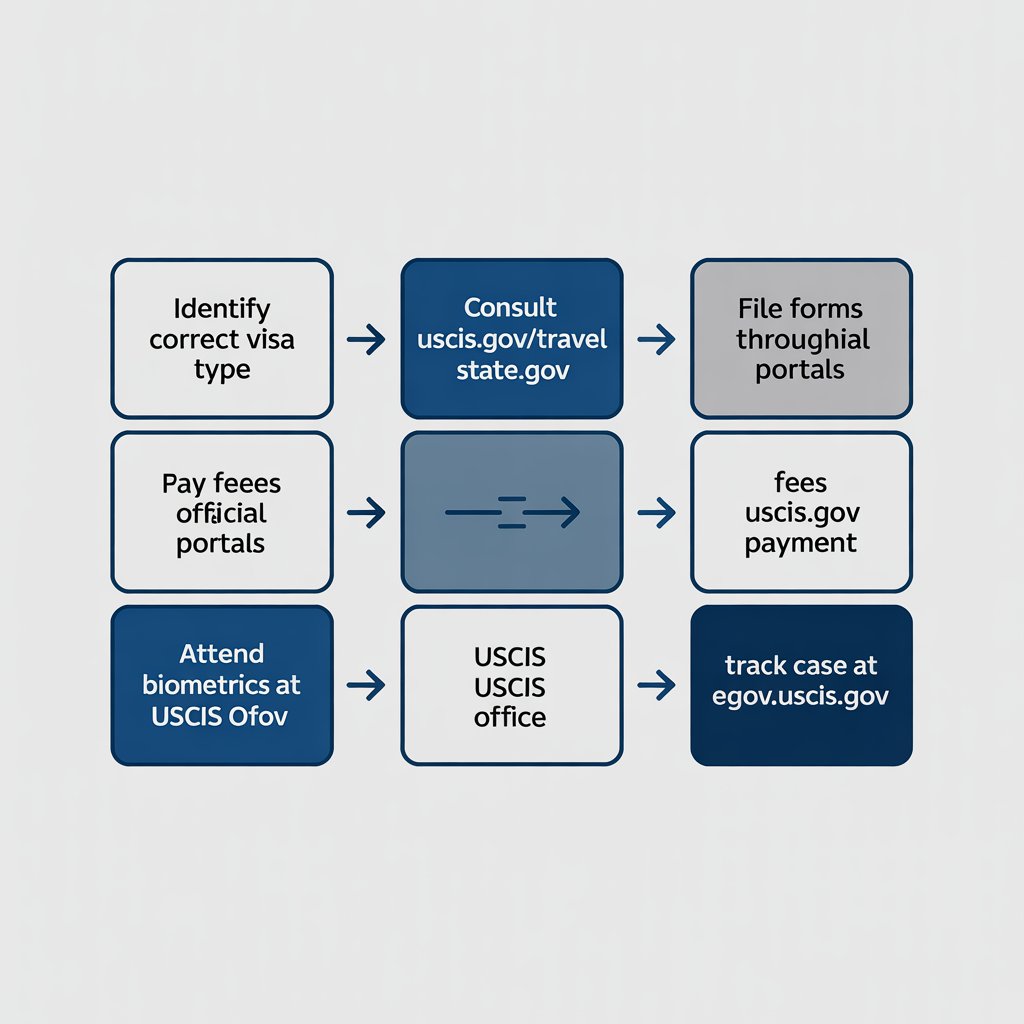
Critical 2026 Changes to Know
- H-1B Cap Registration: Opens March 4, 2026—only via my.uscis.gov
- Biometric Requirements: All applicants now require in-person fingerprinting (no mail-in options)
- Document Validity: Passports must be valid 6+ months beyond visa dates (strictly enforced since Jan 2026)
When to Get Legal Help
Consult an attorney for:
- Cases involving prior deportations
- Criminal history disclosures
- Complex family petitions
- DV Lottery winners (scammers target winners with “processing fee” scams)
💡 Free Resource: The American Bar Association’s Pro Bono Project connects applicants with low-cost attorneys.
What to Do If You’ve Been Scammed
Immediate Actions
- Stop all communication with the scammer
- Preserve evidence: Save emails, texts, payment records
- Report to authorities:
- FTC Complaint: ReportFraud.ftc.gov
- USCIS Tip Form: uscis.gov/report-fraud
- Local police (for identity theft cases)
- Secure accounts:
- Change passwords for email/banking
- Place fraud alerts with credit bureaus
- Report stolen passports to travel.state.gov/passporttheft
If You Shared Financial Information
1. Contact your bank IMMEDIATELY
2. File a police report (required for chargebacks)
3. Monitor accounts for 90 days using:
   - [IdentityTheft.gov](https://www.identitytheft.gov)
   - Credit Karma's free dark web scan
Can You Recover Lost Funds?
- Credit card payments: Dispute within 60 days (Regulation Z protection)
- Wire transfers: Contact FBI’s IC3 within 24 hours for possible reversal
- Gift cards/crypto: Almost unrecoverable—treat as lost
📞 Emergency Contacts:
- FTC Hotline: 877-FTC-HELP (382-4357)
- USCIS Contact Center: 800-375-5283
- Text/TTY: 800-767-1833
Conclusion: Your Best Defense Against Fraud
Visa fraud thrives on urgency and confusion—but you hold the power to stop it. By:
- Verifying every “official” communication through .gov channels
- Never paying before seeing service delivery
- Using USCIS’s free tools like Emma and Case Status Online
- Reporting suspicious activity immediately
…you protect not just your money and documents, but the integrity of the entire immigration system. As USCIS Director Robert F. Silbermann stated in March 2026: “Vigilant applicants are our first line of defense against fraud.”
Remember these core principles:
- No legitimate agency demands instant payments
- .gov is the only trustworthy domain for U.S. immigration
- Real help never pressures you to act before thinking
Stay alert, stay informed, and apply with confidence. For the latest scam alerts, bookmark USCIS Avoid Scams—updated weekly with 2026’s evolving threats.
🔒 2026 Visa Application Security Checklist (Click to Expand)
Pre-Application Verification
- [ ] Confirmed website uses .gov domain (check address bar)
- [ ] Consultant verified via DOJ’s Roster
- [ ] Payment portal shows USCIS logo and https:// (no third-party processors)
Document Safety Protocol
- [ ] Scanned copies—not originals—shared digitally
- [ ] SSN/passport numbers partially redacted in non-official communications
- [ ] Two-factor authentication enabled on all immigration accounts
Post-Submission Vigilance
- [ ] Case status checked only at egov.uscis.gov
- [ ] Biometrics appointment received via official USCIS letter
- [ ] No unsolicited “case updates” acted upon without verification
📞 How to Report Visa Fraud (Step-by-Step)
- Gather Evidence
- Take screenshots of scam communications
- Save payment receipts and contract copies
- Note dates/times of interactions
- File Official Reports
   a) FTC Complaint:
      - Go to [ReportFraud.ftc.gov](https://reportfraud.ftc.gov)
      - Select "Imposter Scams" > "Government Impersonator"

   b) USCIS Tip Form:
      - Complete [online form](https://www.uscis.gov/report-fraud/uscis-tip-form)
      - Attach evidence files (max 25MB)

   c) Local Authorities:
      - File police report for identity theft/fraud
- Provide FTC confirmation number- Monitor Recovery
- FTC will email investigation updates
- USCIS responds to tips within 14 business days
- Banks typically resolve fraud claims in 10-14 days