Imagine closing your laptop in a cozy Austin apartment and opening it the next morning at a sun-drenched café in Barcelona, or trading Texas traffic for a beachfront workspace in Bali. The digital nomad lifestyle is no longer just a fantasy—it’s a reality for thousands of U.S.-based remote workers, freelancers, and entrepreneurs. But before you pack your bags and book a one-way ticket, there’s a crucial hurdle to clear: immigration.
Working abroad legally requires more than just a passport and a Wi-Fi connection. In this comprehensive guide, we’ll break down everything you need to know about the digital nomad visa. You’ll discover the best options for U.S. citizens, navigate the maze of international tax laws, understand healthcare requirements, and learn practical steps to secure your remote work visa. Let’s turn your location-independent dreams into a legally sound, sustainable reality.
What is a digital nomad visa?
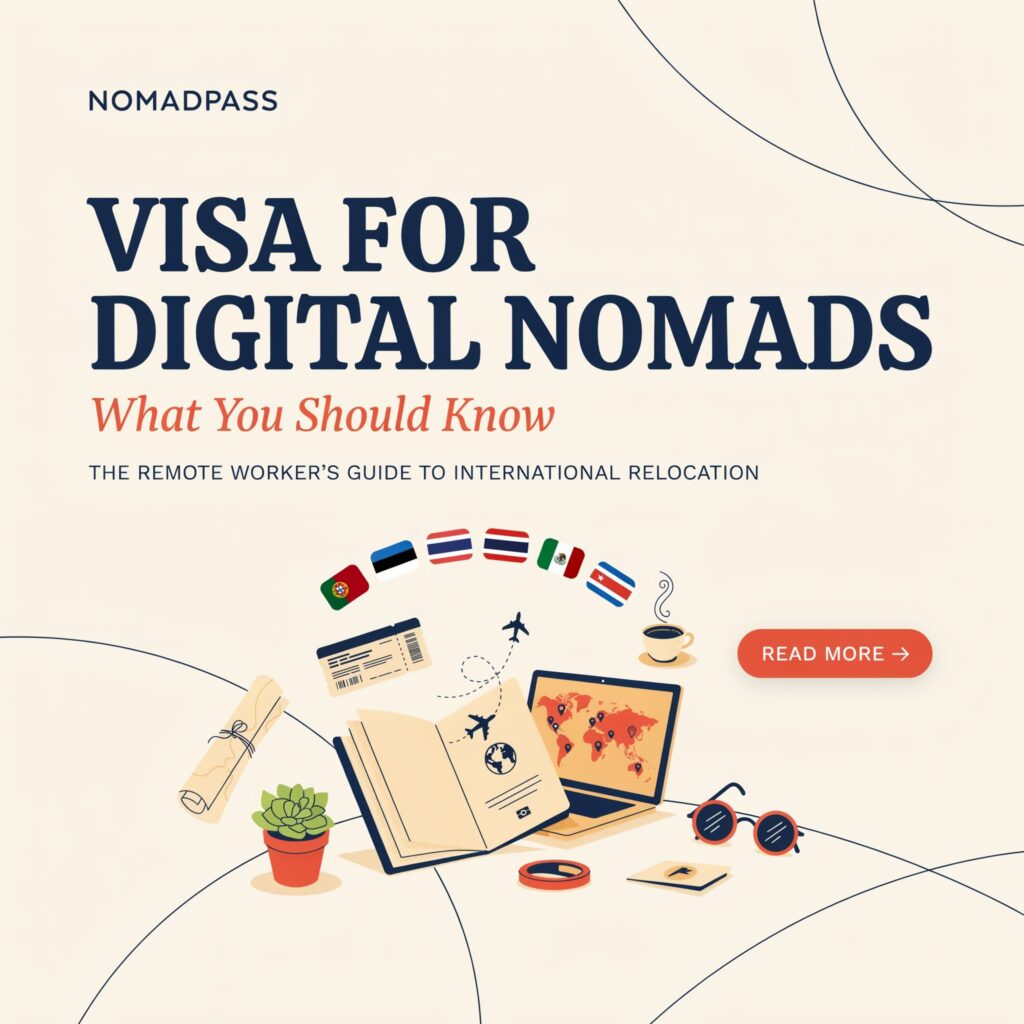
A digital nomad visa is a specific type of long-term travel visa or residency and work permit designed explicitly for location-independent professionals. Unlike traditional tourist visas—which typically limit stays to 30–90 days and strictly prohibit any form of work—or standard work visas, which require sponsorship from a local employer, a remote worker visa allows you to live in a foreign country while earning income from outside that country.
Over the past few years, dozens of countries have introduced visas for digital nomads to attract foreign capital, boost local economies, and revitalize post-pandemic tourism. These visas acknowledge the modern reality of remote work. They provide legal temporary residency for remote workers, allowing you to sign long-term leases, open local bank accounts, and integrate into the community without violating immigration laws. While a tourist visa might seem like an easy loophole for short stints, overstaying or working illegally can result in fines, deportation, and bans from re-entering the country. A dedicated freelance visa or nomad program keeps you on the right side of the law and offers peace of mind as you build your life abroad.
Best digital nomad visas for U.S. citizens
When researching how to apply digital nomad visa programs, U.S. citizens have a wealth of choices. Here are some of the most popular and accessible options as of mid-2026.
- Portugal (D8/Digital Nomad Visa & D7 Passive Income Visa)
Portugal remains a top destination for its high quality of life and relatively low cost of living. The D8 visa is tailored for active remote workers earning at least four times the Portuguese minimum wage (approx. €3,280/month). The D7 is better for those with passive income or substantial savings. Both offer a path to permanent residency and citizenship after five years. (See our deep dive: [Link: Portugal nomad visa guide]) - Spain (Digital Nomad Visa)
Spain recently launched its highly anticipated remote work visa, allowing stays of up to five years. Applicants must prove they’ve been working remotely for at least three months for a company outside Spain, and earn roughly 200% of the Spanish minimum wage. A major perk is the special tax regime (Beckham Law), which can cap your tax rate at 24% for the first €600,000 earned. - Croatia
Croatia’s remote work visa was one of the first of its kind. It allows stays of up to one year, but it cannot be renewed immediately—you must leave for six months before reapplying. The income requirement is relatively low (around €2,540/month), making it perfect for nomads wanting to test the waters of European living without committing to permanent tax residency. - Mexico (Temporary Resident Visa)
While Mexico doesn’t have a specific “nomad” visa, its Temporary Resident Visa is the gold standard for U.S. remote workers. You must prove a steady monthly income (approx. $3,000–$4,000 USD depending on the consulate) or substantial savings. It’s valid for one to four years and allows you to enjoy Mexico’s incredible food, culture, and proximity to U.S. time zones. (Read more: [Link: How to live in Mexico as a remote worker]) - Costa Rica (Rentista / Digital Nomad Visa)
Costa Rica offers a specific “Ley de Nómadas Digitales.” You need to prove a stable monthly income of at least $3,000 USD. The visa is valid for one year and renewable for another. Benefits include tax exemptions on imported tech equipment and the ability to open local bank accounts. - Estonia (Digital Nomad Visa)
Estonia, the pioneer of e-Residency, offers a nomad visa allowing stays of up to one year. You must prove a gross monthly income of at least €4,500 in the six months prior to applying. It’s ideal for tech-savvy entrepreneurs who want a foothold in the EU’s digital ecosystem. - Barbados (Welcome Stamp)
If island life is your goal, the Barbados Welcome Stamp offers a 12-month stay with a straightforward online application. The fee is $2,000 for individuals. There’s no minimum income requirement, but you must declare you have enough funds to support yourself. - UAE (Virtual Working Program)
Dubai’s Virtual Working Program allows you to live in the UAE for one year while working for an employer or owning a company outside the UAE. You must prove a monthly income of at least $3,500. The UAE offers zero income tax, making it highly appealing for high-earning remote workers.
Residency vs. tourist vs. work visa: what’s the difference?
Securing a digital nomad visa U.S. citizens rely on is only the first step; understanding the legal boundaries is just as crucial. The most fundamental rule of almost all nomad visas is that you cannot engage in local employment. Your income must come from a foreign employer, foreign clients, or your own location-independent business registered outside the host country. If you start freelancing for local businesses or taking shifts at a local café, you are violating your visa terms and risk deportation. (Tip: Check our guide on [Link: How to set up a digital business] before moving).
Another vital consideration is family inclusion. Many remote worker visa programs allow you to bring a spouse and dependent children, but they usually require you to prove additional monthly income (often an extra 25% to 50% per dependent) and pay extra application fees.
Furthermore, it’s important to distinguish between temporary residency and permanent residency. While some visas, like Portugal’s D8, offer a direct pathway to permanent residency and eventual citizenship, others—like Croatia’s or Barbados’ Welcome Stamp—are strictly temporary. They do not count toward the years required for citizenship, and you must leave the country once the visa expires. Always review the renewal policies and long-term immigration pathways if you intend to put down permanent roots.
Taxes and reporting for U.S. digital nomads
One of the most complex aspects of the nomadic lifestyle is the tax for digital nomads. As a U.S. citizen, you are subject to citizenship-based taxation. This means you must file a U.S. tax return every year and report your worldwide income to the IRS, regardless of where you physically live.
However, you won’t necessarily be double-taxed. The IRS offers the foreign earned income exclusion (FEIE), which allows qualifying U.S. expats to exclude a significant portion of their foreign-earned income (over $126,000 for the 2024/2025 tax years) from U.S. federal income tax. To qualify, you must pass either the Bona Fide Residence Test or the Physical Presence Test (spending 330 full days outside the U.S. in a 12-month period). Alternatively, you can use the Foreign Tax Credit to offset U.S. taxes with taxes paid to your host country. (Need help? Check our [Link: Tax guides for freelancers]).
Beyond income tax, you must be aware of FBAR FATCA reporting requirements. If the aggregate value of your foreign financial accounts exceeds $10,000 at any point during the year, you must file an FBAR (FinCEN Form 114). FATCA requires reporting foreign assets on Form 8938 if they exceed certain thresholds. Failure to file these forms can result in massive penalties.
State taxes are another common pitfall. If your last U.S. state of residence was a high-tax state like California or New York, you might still owe state income taxes unless you formally break domicile and establish residency in a no-income-tax state (like Florida or Texas) before leaving. Always consult with an expat-specialized CPA before your move.
Health insurance and safety abroad
Your U.S. domestic health insurance likely won’t cover you abroad, and relying on travel credit card insurance is insufficient for long-term stays. Securing robust international health insurance is a non-negotiable requirement for most nomad visa requirements and a vital safety net. (Browse options in our [Link: Travel insurance for long-term travelers] guide).
Look for comprehensive global health plans from providers like Cigna Global or GeoBlue, which cover routine care, specialist visits, and major medical emergencies. If you are on a tighter budget, premium travel medical insurance (like SafetyWing or World Nomads) can cover catastrophic emergencies and medical evacuations, though they often exclude routine care and pre-existing conditions.
Many digital nomad visa programs explicitly require proof of health insurance that covers you in the host country for the duration of your stay. Beyond insurance, prioritize safety by registering with the U.S. State Department’s Smart Traveler Enrollment Program (STEP). Keep your vaccinations up to date, research the local healthcare infrastructure of your chosen destination, and always have a medical evacuation plan in place for remote or developing regions.
How to prepare and apply: step-by-step checklist
Ready to make the leap? Here is your step-by-step checklist for navigating the application process successfully:
- Gather Proof of Income: Most consulates require 3 to 6 months of bank statements, employment contracts, or client invoices proving you meet the minimum income threshold.
- Run Background Checks: You will need a clean criminal record. Obtain an FBI background check or a state police clearance. Note that these documents often need to be apostilled (internationally authenticated), which can take weeks.
- Prepare Health Documents: Secure your international health insurance policy and gather any required vaccination records.
- Organize Remote Work Contracts: Have a letter from your U.S. employer or LLC documentation proving your work is entirely location-independent and can be performed remotely.
- Set Up Financial Logistics: Inform your U.S. bank of your travel plans to avoid frozen accounts. Set up a multi-currency account like Wise or Revolut for easy international transfers. (See [Link: Remote work resources] for banking tips).
- Manage U.S. Ties: Set up a virtual mailbox service to handle your physical mail digitally. Ensure your state tax residency is sorted.
- Get a Local Communication Plan: You’ll need a local phone number for apartment hunting and government portals.
Timeline: Start the process at least 3 to 6 months before your intended move. Apostilling documents, scheduling consulate appointments, and waiting for visa processing can cause significant delays. If the bureaucracy feels overwhelming, consider hiring an immigration lawyer or a specialized relocation agency to guide you through the paperwork.
Micro-Case Study: Take Sara, a 29-year-old software designer from Austin. She chose the Portugal D8 visa for a one-year stint. She spent two months gathering her employment contract, apostilling her Texas background check, and securing a Cigna Global health plan. She showed 12 months of savings in her bank statements to easily pass the income requirement. By working with an expat CPA, she structured her income to utilize the FEIE, ensuring she didn’t owe double taxes. Today, she’s happily working from a café in Lisbon, completely legally.
Myths digital nomads still believe
Many remote workers fall into traps that can jeopardize their travels.
- Myth 1: “I can just work on a tourist visa.” While many do, working on a tourist visa is technically illegal in most countries. If caught, you face fines, deportation, and future travel bans.
- Myth 2: “I don’t have to pay U.S. taxes if I live abroad.” False. U.S. citizens must file annually, regardless of residency. Ignoring the IRS leads to severe penalties.
- Myth 3: “A nomad visa equals permanent residency.” Not always. Many are strictly temporary and do not offer a path to a passport.
- Mistake: Underinsuring. Relying solely on cheap travel insurance can leave you bankrupt in the event of a severe medical emergency abroad.
Conclusion
Securing a digital nomad visa is the ultimate key to unlocking a sustainable, worry-free, location-independent life. By choosing the right country, managing your taxes, and preparing your documents, you can work from anywhere legally.
Next Steps: Pick 2–3 countries from our list and compare their income requirements. Download our free Digital Nomad Visa Checklist below, and book a 15-minute consultation with an expat CPA or relocation advisor to map out your strategy before you fly!
Frequently Asked Questions
Can U.S. citizens apply for digital nomad visas?
Yes, U.S. passport holders are eligible for almost all digital nomad visas worldwide, provided they meet the income and background check requirements outlined by the host country’s immigration authority.
Do digital nomad visas allow local employment?
No. These visas strictly require your income to come from outside the host country. Local employment or competing with local labor is prohibited.
Will I still pay U.S. taxes?
You must file a U.S. tax return annually, but mechanisms like the Foreign Earned Income Exclusion (FEIE) often eliminate your actual U.S. tax liability if you meet the physical presence requirements.
How long can I stay on a nomad visa?
Most are valid for 1 to 2 years, with some (like Spain and Portugal) offering renewals up to 5 years and a path to permanent residency.
Can I bring my partner or kids?
Yes, most programs allow dependents, but you must prove additional monthly income and pay extra application fees for each family member.
What happens if my visa application is denied?
If denied, consulates usually provide a reason (e.g., insufficient funds or incomplete documents). You can often rectify the issue and reapply, or pivot to a different country’s program.